
Disclosure: DROZlegal publishes this article and builds a practice-automation product for Canadian law firms. Facts about Google Cloud’s Gemini Enterprise for Legal launch are drawn from Google’s own Cloud Blog and press materials, plus independent coverage from Artificial Lawyer, Legal IT Insider, Law.com Legaltech News, and other named legal-tech and technology press, each cited by name and date below — verify current terms directly with Google before making any decision. The single claim about DROZlegal below is sourced to this repository’s own capability documentation, not to another marketing page.
The launch, in plain terms
Gemini Enterprise for Legal is a purpose-built version of Google’s Gemini Enterprise platform, configured specifically for law firms and corporate legal departments. Per Google’s own Cloud Blog announcement, it launched in preview on August 25, 2026 with four named law firm customers: Cleary Gottlieb, Freshfields, Weil, and Williams & Connolly.
All four are large firms with major U.S. practices. Google’s official press release, its own blog post, and every piece of independent coverage checked for this article — Artificial Lawyer, Legal IT Insider, Law.com Legaltech News, Unite.AI, LawFuel, TheNextWeb, and several others — name the same four firms and describe the same preview-only availability. No pricing has been made public.

What’s actually in it
Stripped of launch-day framing, Google’s own materials describe four kinds of capability:
- Contract work. Contract review, redlining, and building or updating negotiation playbooks.
- Research and monitoring. Legal research and what Google calls “regulatory horizon scanning” — proactively tracking rule changes relevant to a client or matter.
- Document tasks. Drafting NDAs and redacting documents prepared for motions to seal.
- Privacy-request handling. Automating data subject access request (DSAR) fulfillment.
- Connectors. Per Google’s announcement, the platform connects to at least ten named systems firms already run: iManage, NetDocuments, DocuSign, Everlaw, RelativityOne, Thomson Reuters HighQ, the Free Law Project’s CourtListener.com, Courtroom5, Google Workspace, and Microsoft 365.
- Third-party agents. Pre-built agents from Google and outside legal-tech providers, including named integrations with Harvey, Solve Intelligence, and Legora, plus two agents built by Deloitte.
What every source leaves out
Here’s the concrete finding: of the roughly a dozen sources checked for this article covering the launch — Google’s own blog and press release, plus Artificial Lawyer, Legal IT Insider, Law.com Legaltech News, Unite.AI, LawFuel, TheNextWeb, Yahoo Tech, and others — not one mentions Canada, a Canadian law firm, or where in the world a Canadian firm’s data would actually be processed. That’s not evidence of anything sinister. It simply hasn’t been addressed yet, in public, by anyone covering this launch.
Google’s own claim is that client data, firm-specific playbooks, and model outputs “stay private to your organization” and are never used to train or fine-tune Google’s foundation models, bound by the firm’s own access controls — per the company’s own announcement. That’s a specific claim worth taking seriously. But it’s a claim about isolation and training use, not about physical location. “Private to your organization” and “processed inside Canada” are two different guarantees, and only the vendor can confirm which one it’s actually making.
Google’s own launch materials name four law firm customers — Cleary Gottlieb, Freshfields, Weil, and Williams & Connolly — and do not mention Canada, a Canadian firm, or a data-residency region anywhere. — Google Cloud Blog and press materials, August 25, 2026
Four questions before you treat “private to your organization” as a Canadian answer
DROZlegal’s own vendor-safety checklist sets out four questions every AI vendor should answer in writing. Applied to this specific launch, here’s where each one stands as of publication:
| Question | Where it stands for this launch |
|---|---|
| Is client data used to train the model? | Google says no — not used to train or fine-tune its foundation models. Get that specific commitment in writing, not the press release. |
| How long is data retained before deletion? | Not addressed in any launch coverage checked for this article. Ask directly. |
| Where is data physically processed? | The unanswered one. “Private to your organization” describes isolation, not geography — ask for the specific region before your firm signs anything. |
| What can the AI do without a lawyer’s approval? | Google’s materials describe agents drafting NDAs and redacting motion documents. Confirm what ships as draft-only versus what a firm can configure to act without review. |
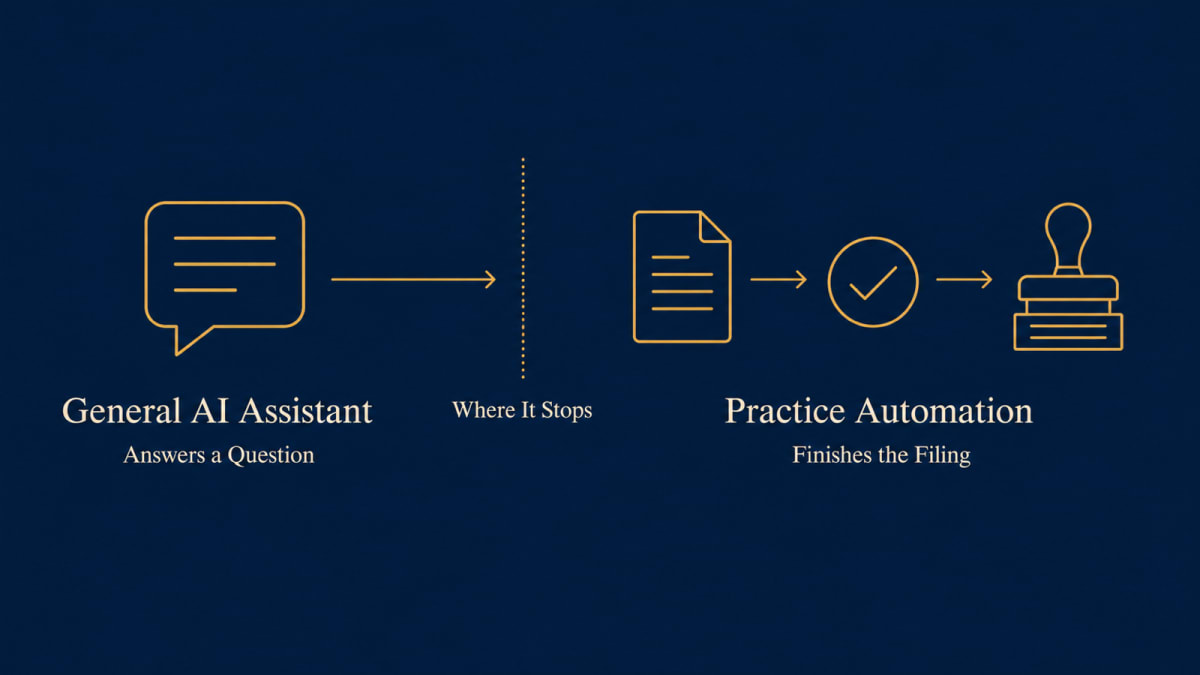
Why this still matters even though no Canadian firm is on the list
A cloud company the size of Google building a dedicated legal-AI product, rather than pointing law firms at its general-purpose assistant, is a signal worth reading regardless of who’s on today’s launch list. It confirms that AI built specifically for legal work — not a chat tool repurposed for law — is a category the largest technology vendors now treat as real, not niche. Canadian firms are already moving in that direction on their own: 89% of large Canadian firms were piloting or had fully integrated AI for research and document review, per Best Lawyers’ 2025 Mid-Year Canadian Legal Market Survey (204 responses, released September 4, 2025).
None of that tells a Canadian firm whether this specific product will meet Canadian data-residency expectations, PIPEDA or Quebec’s Law 25 obligations, or a law society’s supervision duties. Those are firm-specific questions answered by asking a vendor directly and getting the answer in writing — not by reading a launch announcement that was never written with a Canadian buyer in mind. If your firm is earlier in that evaluation process, our AI for lawyers in Canada guide covers the rules that already apply before you sign anything, and our full vendor-safety checklist goes deeper on all four questions above with the follow-up questions to ask when a sales answer sounds too clean.
For a Canadian-built comparison point on the same question, DROZlegal’s own design choice is to keep client data in AWS ca-central-1, with TLS 1.2+ in transit and AES-256 encryption at rest — documented in this platform’s own capability records, and the kind of specific, named region any vendor should be willing to confirm in writing, not just imply.
Whether or not your firm ever evaluates Gemini Enterprise for Legal specifically, the discipline is the same one worth applying to any AI vendor: our guide to what changes when an AI vendor gets acquired covers the parallel question of vendor stability, and our job-by-job AI tools guide compares the current field by task rather than brand. Not ready to subscribe? Join the DROZlegal waitlist instead.